 Add to Chrome
 Add to Firefox
 Add to Edge
Robust Reasoning via Dynamic Token Selection for Distribution-Aligned Self-Distillation
May 30, 2026
Self-distillation improves learning efficiency by rewriting reference answers as training data that better matches the model's own distribution. However, reference answers also introduce strong stylistic biases, causing the generative model to imitate surface forms rather than learn useful reasoning patterns. We observe that the rewriting data contains a large number of high-perplexity (PPL) tokens, coming from two distinct sources: beneficial knowledge-enhancing logical corrections, and harmful stylistic drift induced by reference imitation. Treating all such tokens equally can disrupt the base model's original distribution and degrade performance, especially on difficult reasoning tasks. To address this, we propose Distribution-Aligned Self-Distillation (DASD), which uses an answer-aware reference model to generate candidate tokens and dynamically filters them according to the base model's confidence. DASD preserves tokens that encode useful logical knowledge while suppressing distributionally misaligned style noise. Experiments on math, code, and commonsense reasoning benchmarks show that DASD consistently outperforms competitive baselines, reduces high-PPL tokens, and improves robustness across tasks of varying difficulty.

Beyond Literal Translation: Evaluating Cultural Effectiveness in Social Media UGC
May 25, 2026Social media platforms enable large-scale cross-lingual communication, but translating user-generated content (UGC) remains challenging due to its informal style, cultural references, and interaction-based expressions. While recent LLMs have improved translation quality, existing benchmarks and metrics often fail to capture whether translations convey intended meaning and cultural resonance in real-world settings. In this work, we introduce CULTURE-MT, a benchmark for social media translation that focuses on both CULtural Transmission and UGC-specific emotion REsonance. CULTURE-MT consists of 1,002 UGC notes across 14 domains, categorized into four types based on culture-loaded symbols and linguistic style features. We also construct UGC-oriented training data to fine-tune Qwen3-8B and Qwen3-32B as baselines. We propose cultural effectiveness as a new evaluation criterion, focusing on expression accuracy and cultural adaptability. Testing 15 models, including the baselines, we find that traditional metrics fail to capture cultural effectiveness. We also observe that cultural effectiveness on base LLMs correlates with model size. Our work provides a comprehensive evaluation system for UGC translation models and will offer an open evaluation platform to advance research in this area. We release the CULTURE-MT benchmark and provide an online leaderboard where submitted translation results can be evaluated by our trained JUDGER.
Focused Forcing: Content-Aware Per-Frame KV Selection for Efficient Autoregressive Video Diffusion
May 18, 2026Recent advances in autoregressive video diffusion have enabled sequential and streaming video generation. However, long-horizon generation requires increasingly large KV caches, making efficient compression without sacrificing quality challenging. Existing methods mostly select historical frames based on attention scores, but their context decisions remain coarse. When multiple frames are generated in the same chunk, these methods often apply a shared history selection to the whole chunk, score historical frames solely by attention, and assign head-wise budgets either uniformly or by attention-pattern heuristics rather than explicit head-importance estimation. We show that frames within the same generated chunk can depend on distinct historical frames, that the same historical frame can receive different attention scores as its relative temporal distance to the current frames changes, and that masking different heads induces unequal generation degradation. Motivated by these findings, we propose \textbf{Focused Forcing}, a training-free KV selection method that focuses cached history along both generated-frame and head dimensions. For each generated frame, Focused Forcing preserves the most relevant and distinctive historical frames by combining attention scores with diversity scores of historical frames, while assigning larger budgets to heads with higher estimated importance. Across multiple autoregressive generation paradigms, Focused Forcing achieves up to $\textbf{1.48}\times$ end-to-end acceleration without training, while \textbf{improving visual quality and text alignment}. \textit{Our code will be released on GitHub.}
DiT-IC: Aligned Diffusion Transformer for Efficient Image Compression
Mar 13, 2026Diffusion-based image compression has recently shown outstanding perceptual fidelity, yet its practicality is hindered by prohibitive sampling overhead and high memory usage. Most existing diffusion codecs employ U-Net architectures, where hierarchical downsampling forces diffusion to operate in shallow latent spaces (typically with only 8x spatial downscaling), resulting in excessive computation. In contrast, conventional VAE-based codecs work in much deeper latent domains (16x - 64x downscaled), motivating a key question: Can diffusion operate effectively in such compact latent spaces without compromising reconstruction quality? To address this, we introduce DiT-IC, an Aligned Diffusion Transformer for Image Compression, which replaces the U-Net with a Diffusion Transformer capable of performing diffusion in latent space entirely at 32x downscaled resolution. DiT-IC adapts a pretrained text-to-image multi-step DiT into a single-step reconstruction model through three key alignment mechanisms: (1) a variance-guided reconstruction flow that adapts denoising strength to latent uncertainty for efficient reconstruction; (2) a self-distillation alignment that enforces consistency with encoder-defined latent geometry to enable one-step diffusion; and (3) a latent-conditioned guidance that replaces text prompts with semantically aligned latent conditions, enabling text-free inference. With these designs, DiT-IC achieves state-of-the-art perceptual quality while offering up to 30x faster decoding and drastically lower memory usage than existing diffusion-based codecs. Remarkably, it can reconstruct 2048x2048 images on a 16 GB laptop GPU.
From Unfamiliar to Familiar: Detecting Pre-training Data via Gradient Deviations in Large Language Models
Mar 05, 2026Pre-training data detection for LLMs is essential for addressing copyright concerns and mitigating benchmark contamination. Existing methods mainly focus on the likelihood-based statistical features or heuristic signals before and after fine-tuning, but the former are susceptible to word frequency bias in corpora, and the latter strongly depend on the similarity of fine-tuning data. From an optimization perspective, we observe that during training, samples transition from unfamiliar to familiar in a manner reflected by systematic differences in gradient behavior. Familiar samples exhibit smaller update magnitudes, distinct update locations in model components, and more sharply activated neurons. Based on this insight, we propose GDS, a method that identifies pre-training data by probing Gradient Deviation Scores of target samples. Specifically, we first represent each sample using gradient profiles that capture the magnitude, location, and concentration of parameter updates across FFN and Attention modules, revealing consistent distinctions between member and non-member data. These features are then fed into a lightweight classifier to perform binary membership inference. Experiments on five public datasets show that GDS achieves state-of-the-art performance with significantly improved cross-dataset transferability over strong baselines. Further interpretability analyse show gradient feature distribution differences, enabling practical and scalable pre-training data detection.
Scalable Quantum Error Mitigation with Neighbor-Informed Learning
Dec 14, 2025Noise in quantum hardware is the primary obstacle to realizing the transformative potential of quantum computing. Quantum error mitigation (QEM) offers a promising pathway to enhance computational accuracy on near-term devices, yet existing methods face a difficult trade-off between performance, resource overhead, and theoretical guarantees. In this work, we introduce neighbor-informed learning (NIL), a versatile and scalable QEM framework that unifies and strengthens existing methods such as zero-noise extrapolation (ZNE) and probabilistic error cancellation (PEC), while offering improved flexibility, accuracy, efficiency, and robustness. NIL learns to predict the ideal output of a target quantum circuit from the noisy outputs of its structurally related ``neighbor'' circuits. A key innovation is our 2-design training method, which generates training data for our machine learning model. In contrast to conventional learning-based QEM protocols that create training circuits by replacing non-Clifford gates with uniformly random Clifford gates, our approach achieves higher accuracy and efficiency, as demonstrated by both theoretical analysis and numerical simulation. Furthermore, we prove that the required size of the training set scales only \emph{logarithmically} with the total number of neighbor circuits, enabling NIL to be applied to problems involving large-scale quantum circuits. Our work establishes a theoretically grounded and practically efficient framework for QEM, paving a viable path toward achieving quantum advantage on noisy hardware.
On computing and the complexity of computing higher-order $U$-statistics, exactly
Aug 18, 2025Higher-order $U$-statistics abound in fields such as statistics, machine learning, and computer science, but are known to be highly time-consuming to compute in practice. Despite their widespread appearance, a comprehensive study of their computational complexity is surprisingly lacking. This paper aims to fill that gap by presenting several results related to the computational aspect of $U$-statistics. First, we derive a useful decomposition from an $m$-th order $U$-statistic to a linear combination of $V$-statistics with orders not exceeding $m$, which are generally more feasible to compute. Second, we explore the connection between exactly computing $V$-statistics and Einstein summation, a tool often used in computational mathematics, quantum computing, and quantum information sciences for accelerating tensor computations. Third, we provide an optimistic estimate of the time complexity for exactly computing $U$-statistics, based on the treewidth of a particular graph associated with the $U$-statistic kernel. The above ingredients lead to a new, much more runtime-efficient algorithm of exactly computing general higher-order $U$-statistics. We also wrap our new algorithm into an open-source Python package called $\texttt{u-stats}$. We demonstrate via three statistical applications that $\texttt{u-stats}$ achieves impressive runtime performance compared to existing benchmarks. This paper aspires to achieve two goals: (1) to capture the interest of researchers in both statistics and other related areas further to advance the algorithmic development of $U$-statistics, and (2) to offer the package $\texttt{u-stats}$ as a valuable tool for practitioners, making the implementation of methods based on higher-order $U$-statistics a more delightful experience.
SPEED-RL: Faster Training of Reasoning Models via Online Curriculum Learning
Jun 10, 2025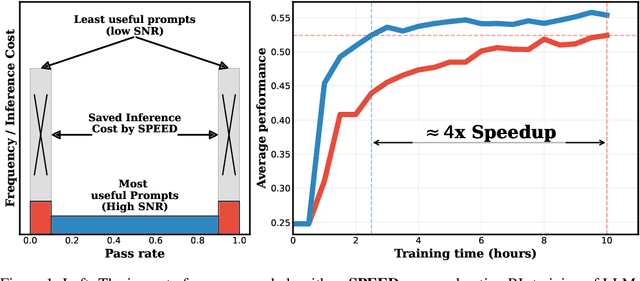

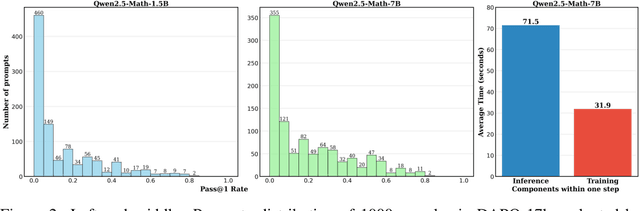
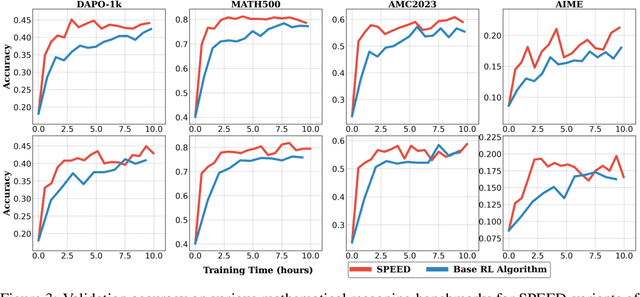
Training large language models with reinforcement learning (RL) against verifiable rewards significantly enhances their reasoning abilities, yet remains computationally expensive due to inefficient uniform prompt sampling. We introduce Selective Prompting with Efficient Estimation of Difficulty (SPEED), an adaptive online RL curriculum that selectively chooses training examples of intermediate difficulty to maximize learning efficiency. Theoretically, we establish that intermediate-difficulty prompts improve the gradient estimator's signal-to-noise ratio, accelerating convergence. Empirically, our efficient implementation leads to 2x to 6x faster training without degrading accuracy, requires no manual tuning, and integrates seamlessly into standard RL algorithms.
Long or short CoT? Investigating Instance-level Switch of Large Reasoning Models
Jun 04, 2025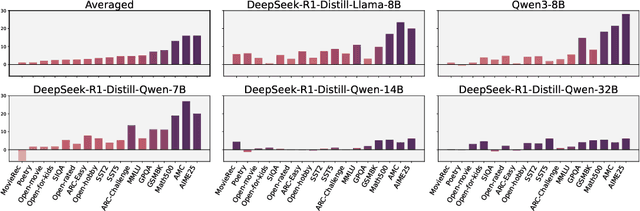
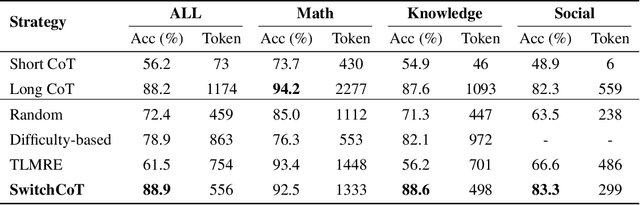
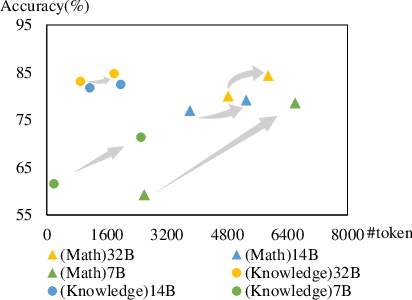
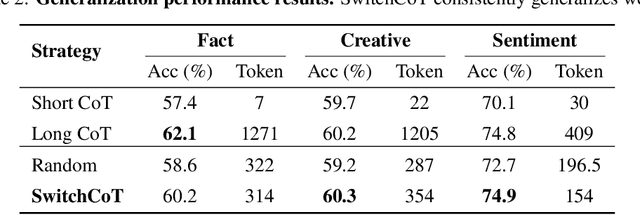
With the rapid advancement of large reasoning models, long Chain-of-Thought (CoT) prompting has demonstrated strong performance on complex tasks. However, this often comes with a significant increase in token usage. In this paper, we conduct a comprehensive empirical analysis comparing long and short CoT strategies. Our findings reveal that while long CoT can lead to performance improvements, its benefits are often marginal relative to its significantly higher token consumption. Specifically, long CoT tends to outperform when ample generation budgets are available, whereas short CoT is more effective under tighter budget constraints. These insights underscore the need for a dynamic approach that selects the proper CoT strategy based on task context and resource availability. To address this, we propose SwitchCoT, an automatic framework that adaptively chooses between long and short CoT strategies to balance reasoning accuracy and computational efficiency. Moreover, SwitchCoT is designed to be budget-aware, making it broadly applicable across scenarios with varying resource constraints. Experimental results demonstrate that SwitchCoT can reduce inference costs by up to 50% while maintaining high accuracy. Notably, under limited token budgets, it achieves performance comparable to, or even exceeding, that of using either long or short CoT alone.
MLMC-based Resource Adequacy Assessment with Active Learning Trained Surrogate Models
May 27, 2025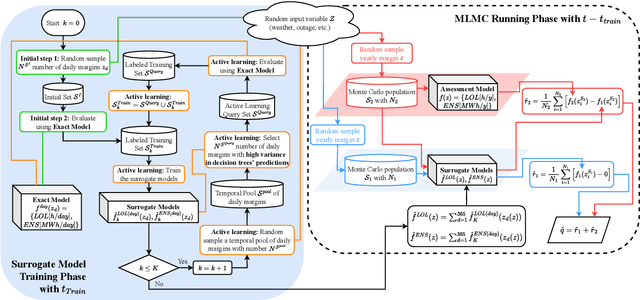
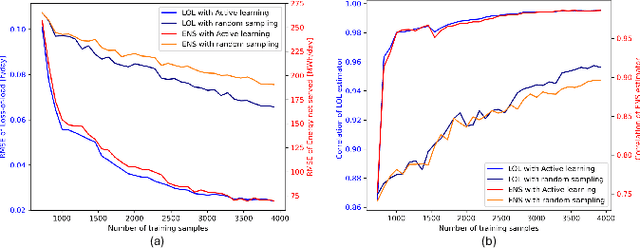
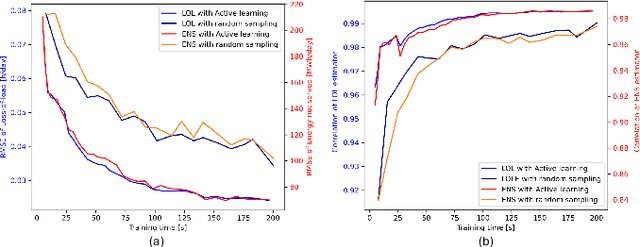
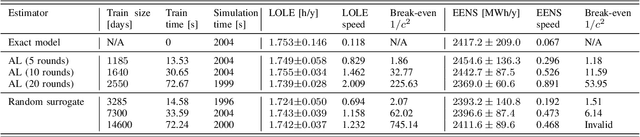
Multilevel Monte Carlo (MLMC) is a flexible and effective variance reduction technique for accelerating reliability assessments of complex power system. Recently, data-driven surrogate models have been proposed as lower-level models in the MLMC framework due to their high correlation and negligible execution time once trained. However, in resource adequacy assessments, pre-labeled datasets are typically unavailable. For large-scale systems, the efficiency gains from surrogate models are often offset by the substantial time required for labeling training data. Therefore, this paper introduces a speed metric that accounts for training time in evaluating MLMC efficiency. Considering the total time budget is limited, a vote-by-committee active learning approach is proposed to reduce the required labeling calls. A case study demonstrates that, within practical variance thresholds, active learning enables significantly improved MLMC efficiency with reduced training effort, compared to regular surrogate modelling approaches.